
A Road Trip from Prague to Poland’s Hidden Gem
Six hours on the road from Prague, if traffic is kind and the coffee breaks aren’t too long lands you in Krakow, one of Poland’s most captivating cities. For us, this wasn’t just another weekend getaway. It was an adventure filled with history above ground, magic carved deep underground, and a surprise summer oasis in the form of a flooded quarry turned lake. Krakow has that perfect balance: ancient charm, bustling squares, and hidden spots that make you want to linger just a little longer.
Day 1: Monastery Hills and the Heart of Old Town

We started our journey just outside the city at the Benedictine Abbey in Tyniec, perched gracefully above the Vistula River. The abbey’s church, the Church of Saints Peter and Paul, was alive with locals attending mass while we walked its quiet grounds. It’s a serene place, less about action and more about atmosphere. From the hilltop, the best view comes not from the abbey itself, but across the river. There’s even a small ferry crossing, though the other side opens into fields rather than more monuments. Still, it was the perfect way to set the tone: calm, reflective, and a reminder that Krakow’s treasures come in many forms.
Next stop was the Krakus Mound, a grassy hill rising just above the city. To be honest, the view wasn’t the best I’ve seen, but I could imagine it transforming into a favorite late night hangout spot for locals. With its open space and sunset backdrop, it felt more like a gathering point than a sightseeing must, though it gave us a fun perspective before diving into the city center.
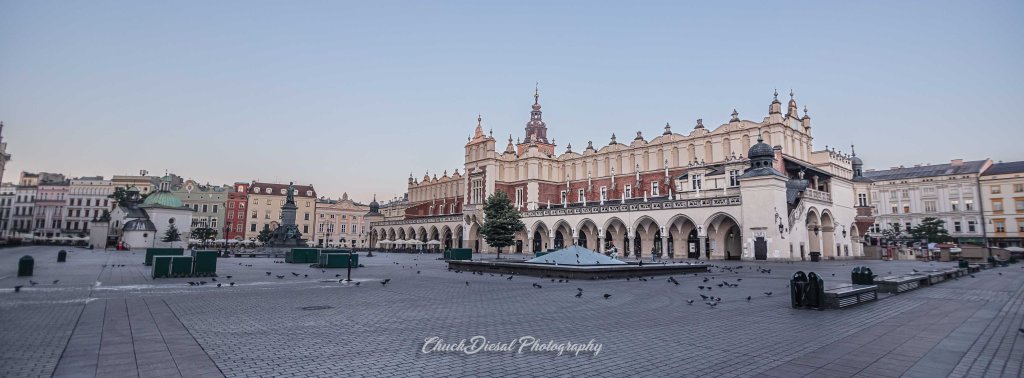
By late afternoon we found ourselves in Rynek Główny, Krakow’s famous Old Town square, where the city comes alive. At the center stands the striking Cloth Hall (Sukiennice), its arches buzzing with a market inside. Around it, architectural giants demand your attention: the bugle tower, St. Mary’s Basilica, and the small but historic Church of St. Wojciech. The square itself is an open air stage for people watching the swirl of tourists, locals, street performers, and horse drawn carriages feels timeless.
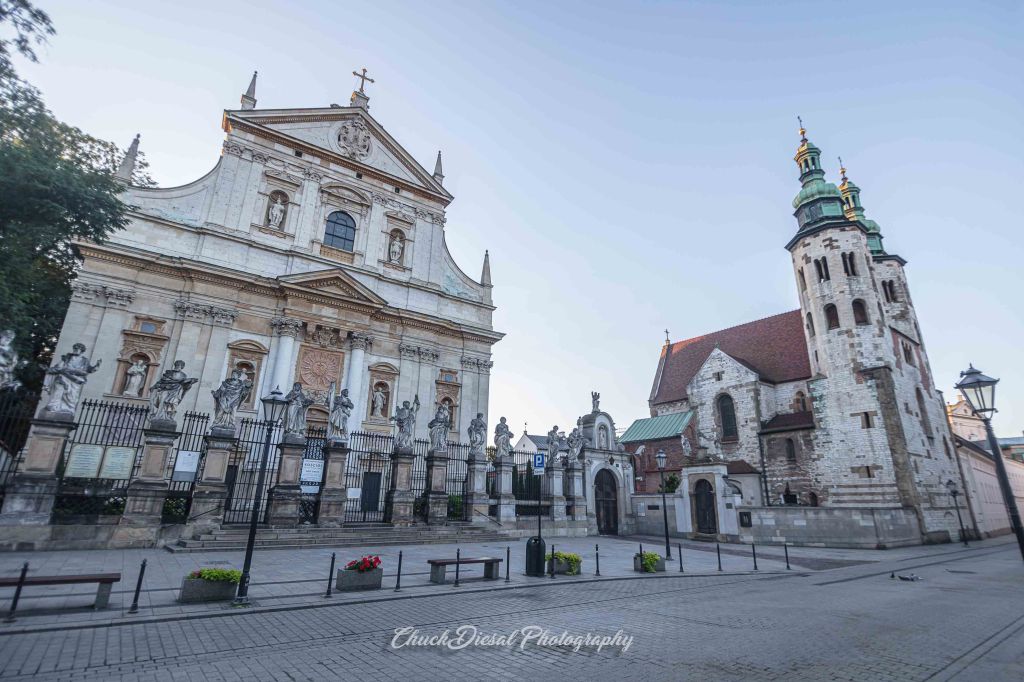
From there, we wandered down Floriańska Street, the city’s main artery of shops, cafés, and tourist temptations. The street leads straight to St. Florian’s Gate, and just beyond, the Kraków Barbican, a medieval fortress that once protected the city’s entrance. (If you’re wondering what the Barbican is, think of it as a round defensive outpost with walls thick enough to stop armies in their tracks.)
And of course, no day in Krakow’s Old Town is complete without a food stop. My go to? Polish donuts. You’ll see countless little shops selling them, each with different fillings, from classic plum to creamy custards. They’re the perfect sweet snack between sightseeing and sipping coffee in the square.
As the sun set, we wrapped up our first day surrounded by the hum of Old Town, knowing Krakow still had plenty of surprises waiting for us.
Day 2: Deep Underground and a Quarry Paradise Above

The second day began with a short drive out of the city to one of Poland’s crown jewels: the Wieliczka Salt Mine. Just 30 minutes from Krakow without traffic, this UNESCO World Heritage Site is the definition of history meeting wonder. We took the Tourist Route, which lasts about two hours and winds through nearly 3 kilometers of tunnels. The journey is all downhill at first hundreds of stairs leading deeper and deeper until you find yourself more than 120 meters underground. Don’t worry, the elevators bring you back up at the end.

The salt mine is far more than just a relic of Poland’s “white gold” trade. It’s a subterranean city carved in stone. Along the way, we passed sculptures, chapels, a grotto, and even a full blown underground church complete with chandeliers and every detail made entirely of salt. Standing in that massive church carved by miners centuries ago was surreal, and for me, the highlight of the entire tour. There’s also a banquet hall used for weddings and events, proving this place is as alive today as it was hundreds of years ago.
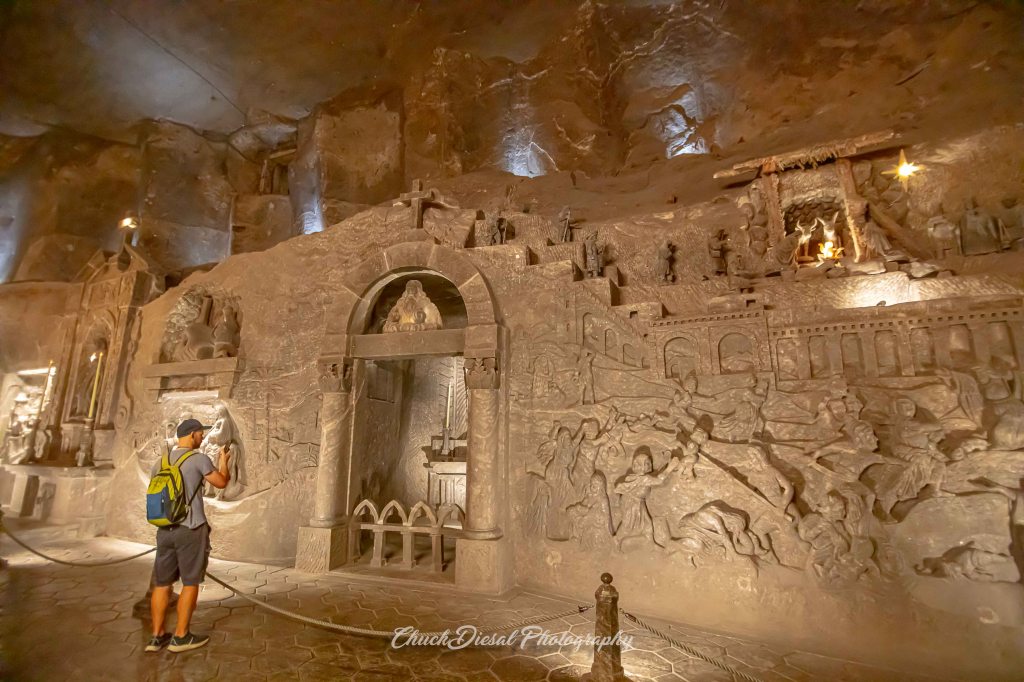
The guides here keep the experience engaging. Each visitor gets a radio receiver to hear their commentary clearly, even in large groups. The temperature underground sits around 17°C, which makes the long walk comfortable. Photography and video are encouraged (just not of the guides themselves), so you can really capture the otherworldly atmosphere.

Climbing back into the daylight, we overheard a couple talking about a lake nearby, a beach in Krakow? That was news to us, and in true road trip fashion, we decided to check it out. That’s how we found Kąpielisko Zakrzówek, and let me tell you, it’s a game changer.
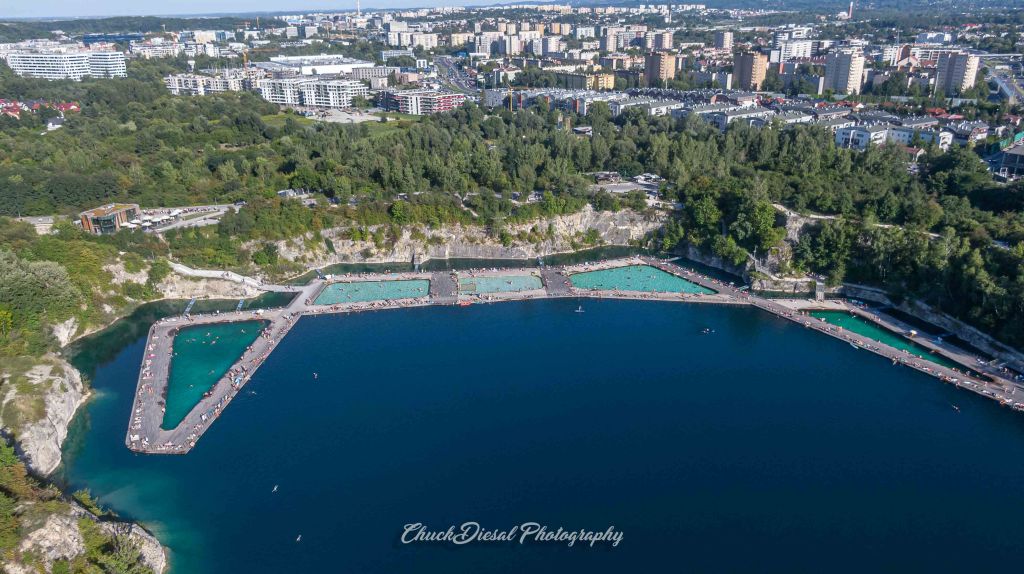
Zakrzówek is a massive flooded quarry turned into a sparkling blue lake just outside the city. There’s a trail that circles the water, giving you full 360-degree views from above, but the real magic is at the lakeside access points. The official beach area, with a capacity of about 600 people, is well maintained and buzzing with energy. A wooden boardwalk lines the edge of the quarry, and from it, you can step straight into the water or try out the floating pools of varying depths built right into the lake.
On a hot summer day, the thermometer hit 30°C for us & the water was perfectly refreshing. Families, swimmers, paddle boarders, and sunbathers all shared the space, giving it the lively atmosphere of a seaside resort, minus the sea. It was the perfect counterbalance to the dark, cool tunnels of the salt mine: history in the morning, summer vibes in the afternoon.
We left Zakrzówek sun tired and smiling, the kind of happy exhaustion only a perfect summer day can bring.
Day 3: Castles on the Hill and One More Swim
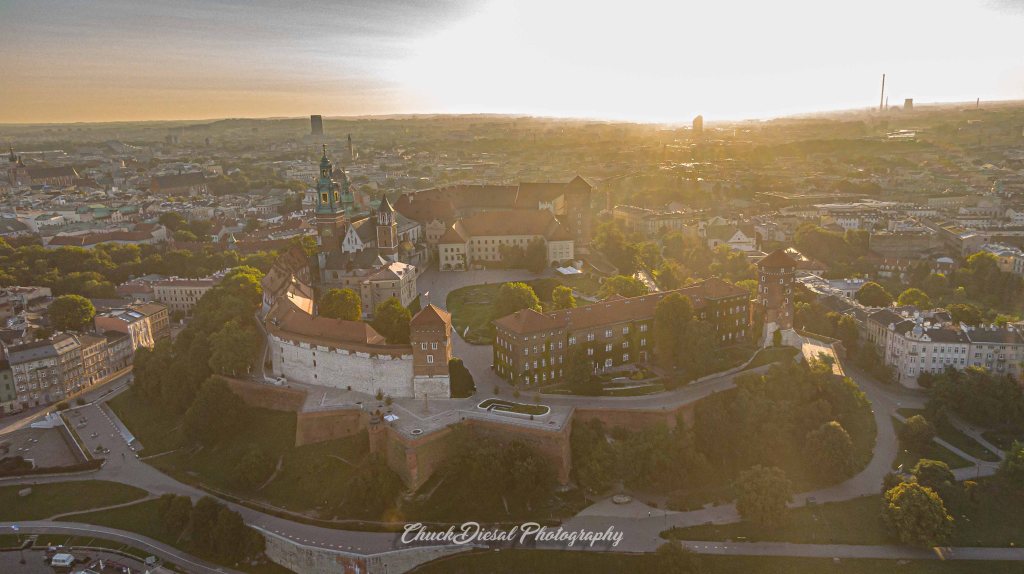
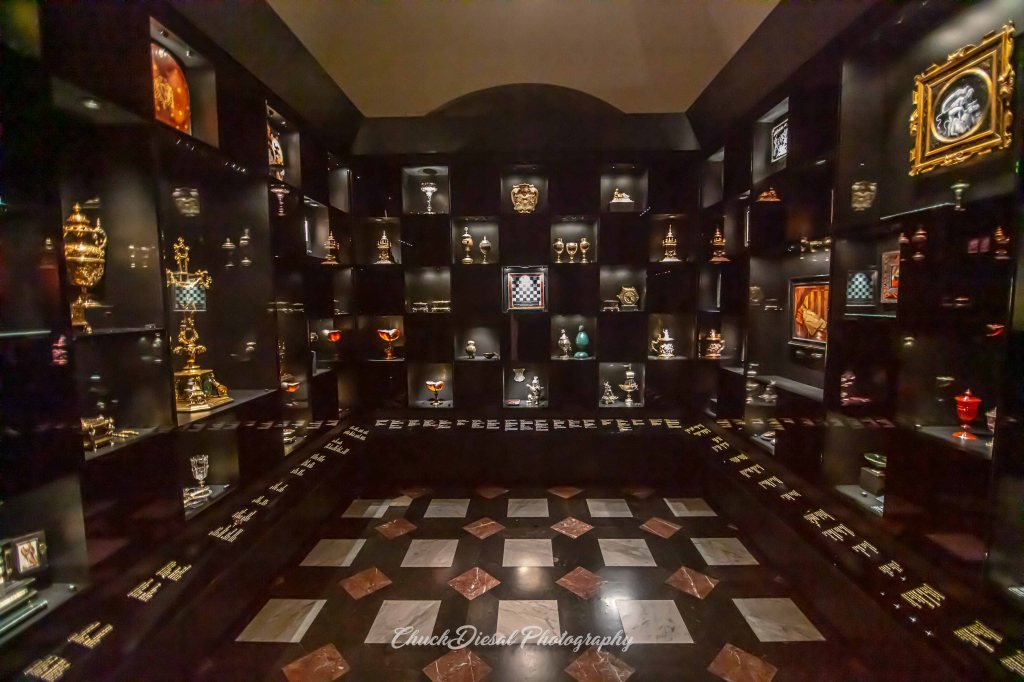
No trip to Krakow is complete without visiting Wawel Castle, the city’s crown jewel perched proudly above the Vistula River. The castle grounds themselves are open and inviting, with gardens, courtyards, and sweeping views of the city below. Inside, there are multiple exhibits and tours to choose from, but we decided on the Treasury Tour. The art and artifacts on display were magnificent ornate royal collections, historical treasures, and craftsmanship that leaves you lingering in each room. I took plenty of photos here, each one capturing another angle of Krakow’s regal past.
After the castle, we made our way back to the Old Town square for lunch, where Krakow does what it does best: combining history with everyday life. Sitting at an outdoor café, surrounded by centuries old architecture and the constant rhythm of the square, felt like the perfect way to pause before our final evening adventure.
And of course, that adventure led us back to Zakrzówek Quarry. This time we arrived just before 6 PM, which meant no waiting in line, after 6, all the restrictions are lifted and the area becomes a free for all. Instead of heading to the managed beach section, we explored the other side of the quarry, known as Miejsce kąpielowe morsów Zakrzówek. Here, people simply walk down to the water wherever they like, claiming their own little slice of shoreline. The vibe is looser, more natural, and every bit as refreshing. Watching the evening sun reflect off the turquoise water while locals swam, laughed, and relaxed was the perfect way to close out our Krakow adventure.
Reflections on Krakow
This was our first trip to the Krakow region, and it won’t be the last. From the quiet hills of Tyniec Abbey to the depths of the Wieliczka Salt Mine, from the energy of Old Town to the surprise discovery of Zakrzówek Quarry, Krakow gave us history, culture, and pure summertime joy. It’s the kind of city where every corner offers a story, and where even overhearing a stranger’s beach tip can change the course of your day.
For us, it was more than just a weekend getaway, it was a reminder of why road trips matter. You never know what you’ll find until you’re there, walking the streets, tasting the food, and diving into the water.
Have you experienced this part of Poland yet?
See my entire Flickr album at https://flic.kr/s/aHBqjCqThQ





 The Ride with ChuckDiesal
What’s your Opinion?